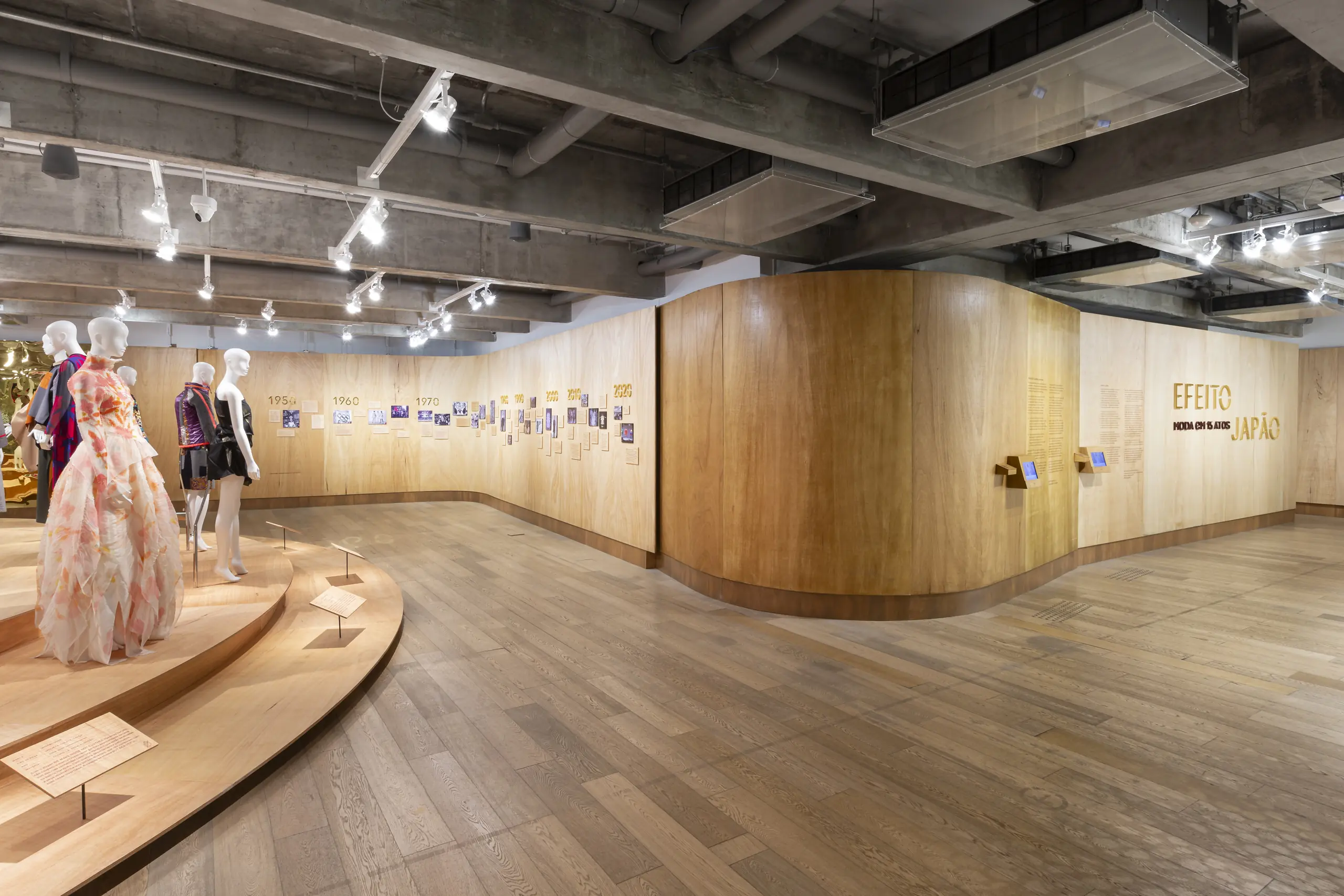
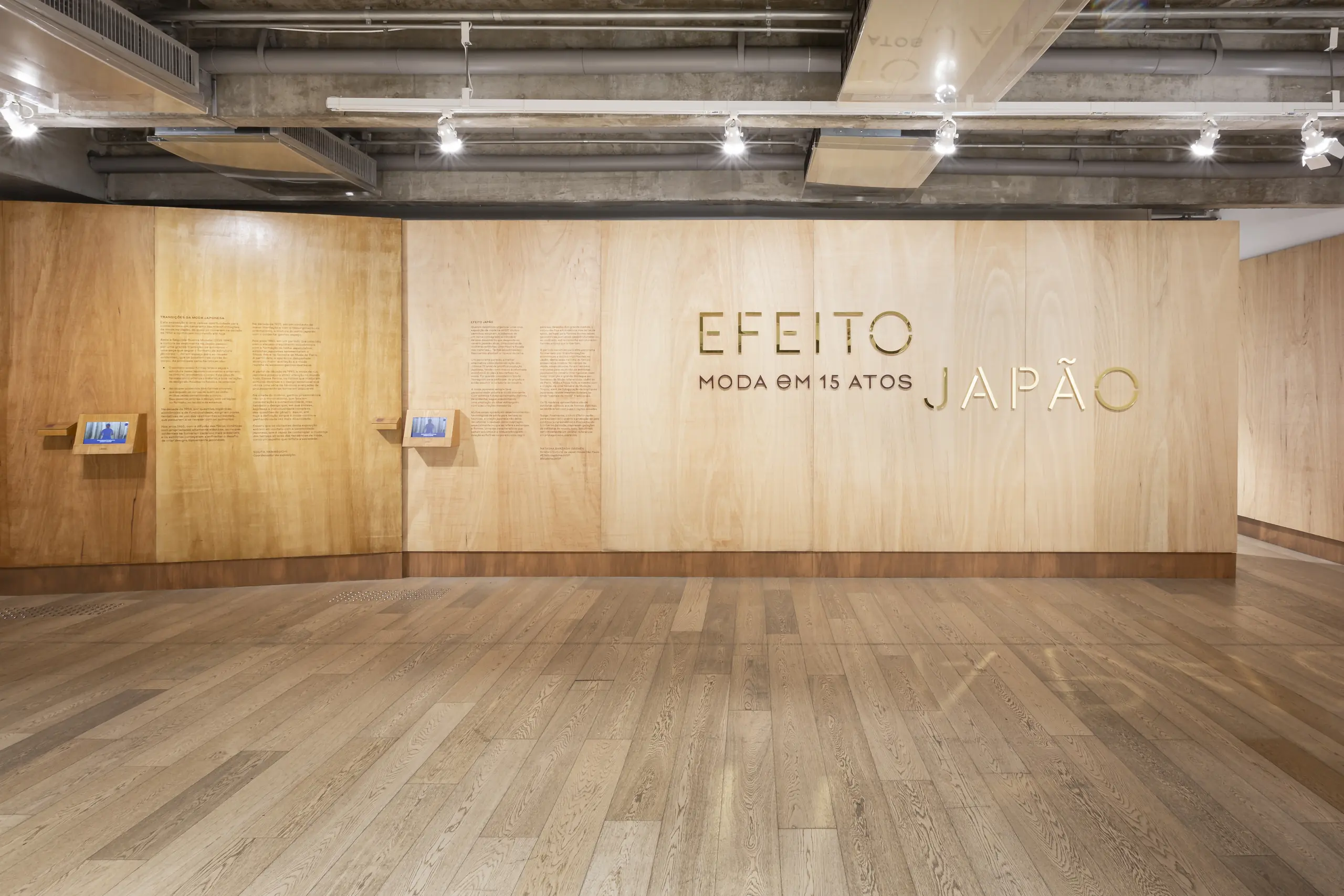
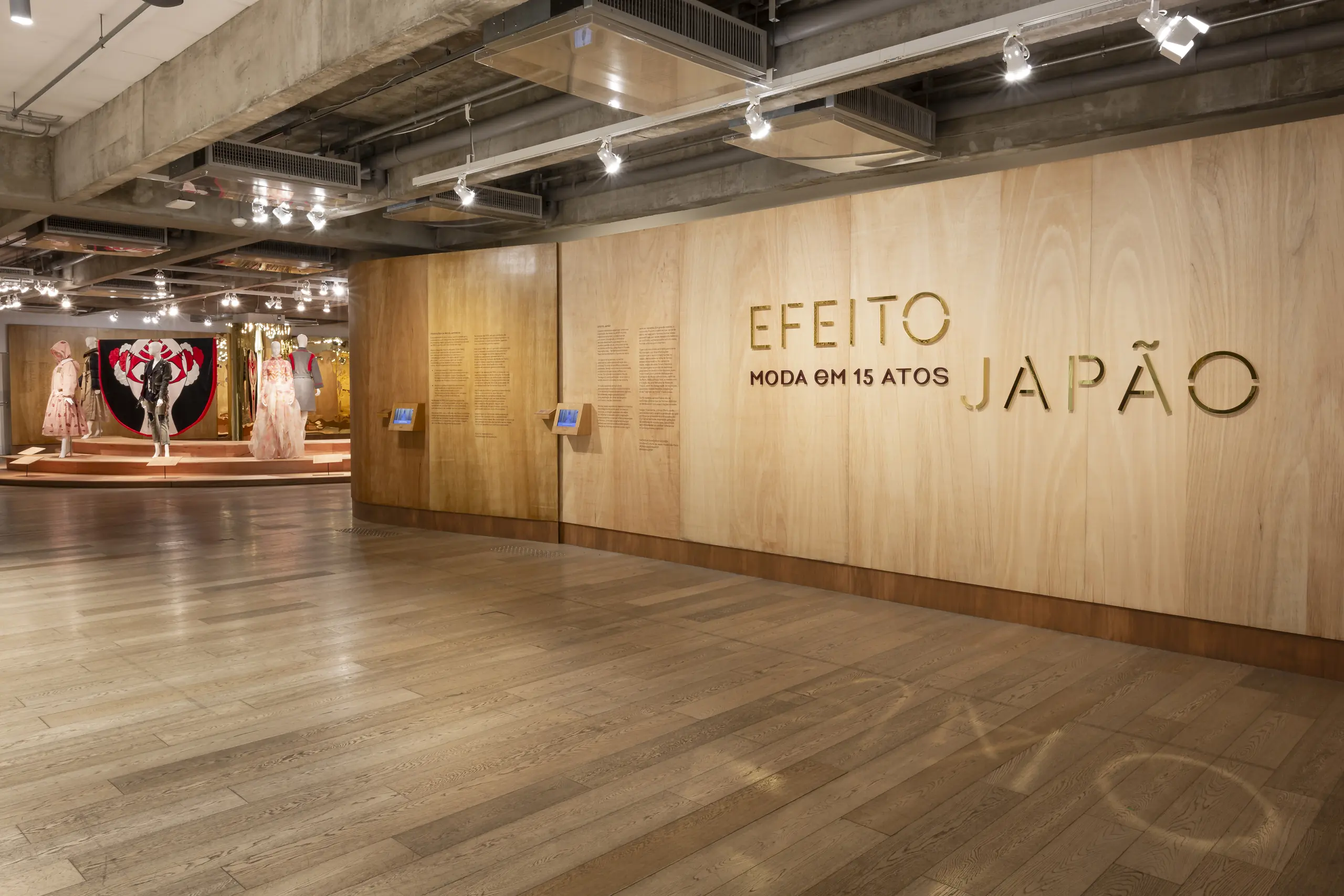
The storie that the works on display reveal
1950’s:
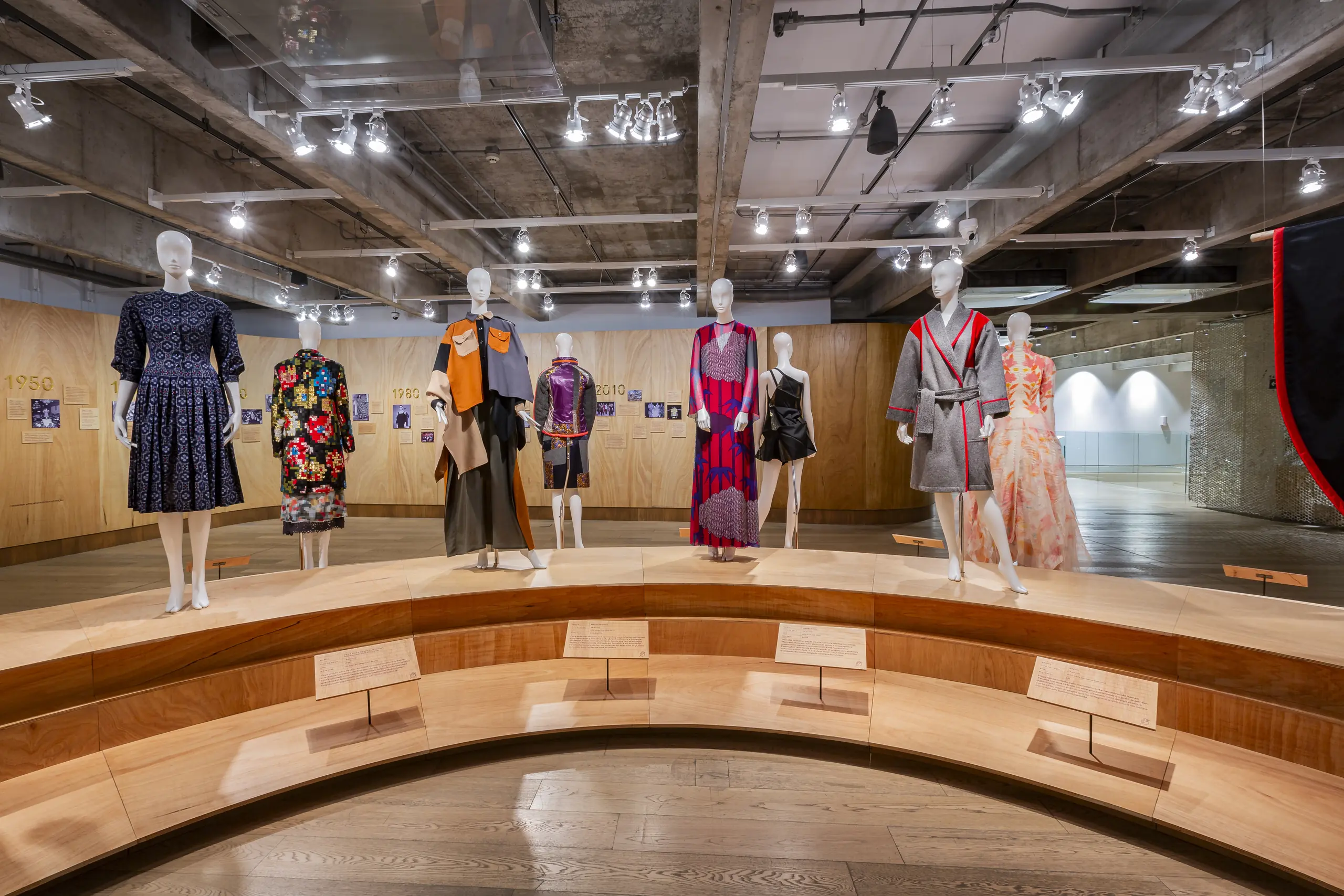
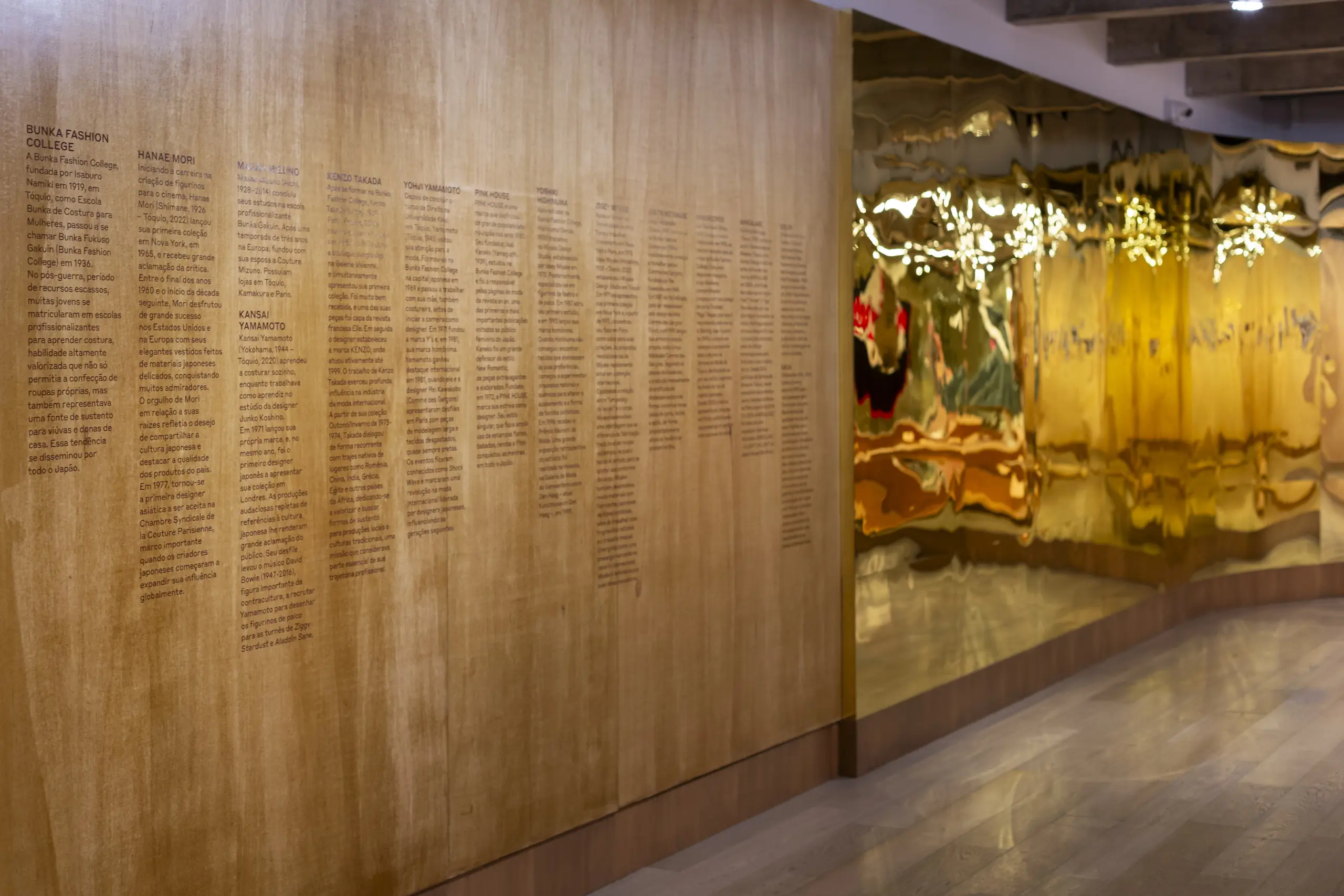
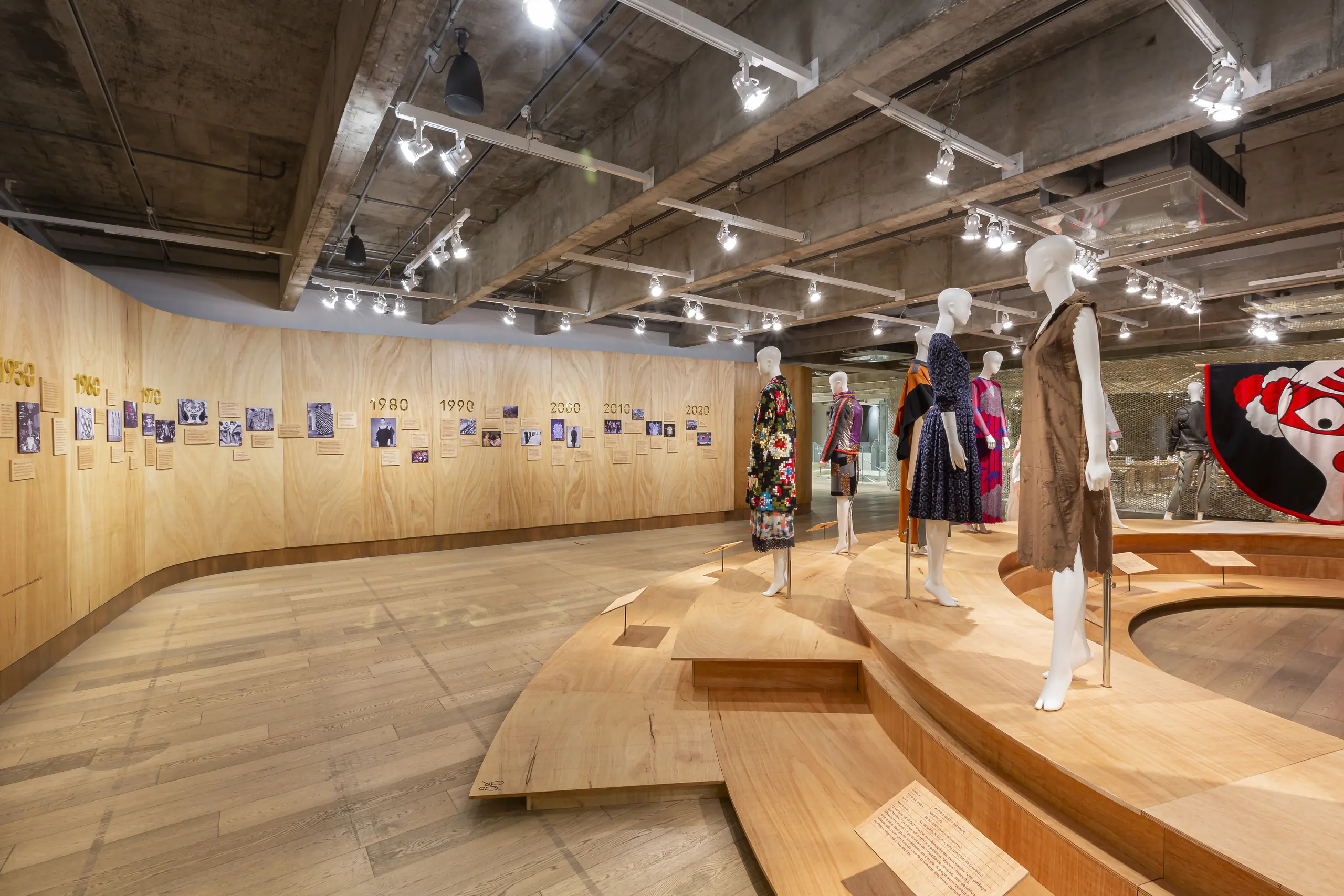
Postwar Japan was redefining both the kimono and Western clothing in terms of function, hygiene, and economy. The oldest piece in the exhibition is made with a combination of kimono fabrics made using traditional Okinawan weaving techniques, Ryūkyū kasuri, in which cotton is dyed with natural dyes. The garment was created during a period when fashion shows started to become popular in Japan, mirroring the historical shift in Japanese fashion from kimonos to Western attire.
1960’s:
The introduction of stretchy synthetic fabrics marked the gradual integration of Western clothing, initiating a shift in Japanese-style design. One of the showcased pieces is a bamboo print dress crafted from a single piece of polyester crepe fabric, without any cuts in the shoulder area. Hanae Mori, the first Asian designer to be accepted into the Chambre Syndicale de la Couture Parisienne, created this remarkable piece.
1970’s:
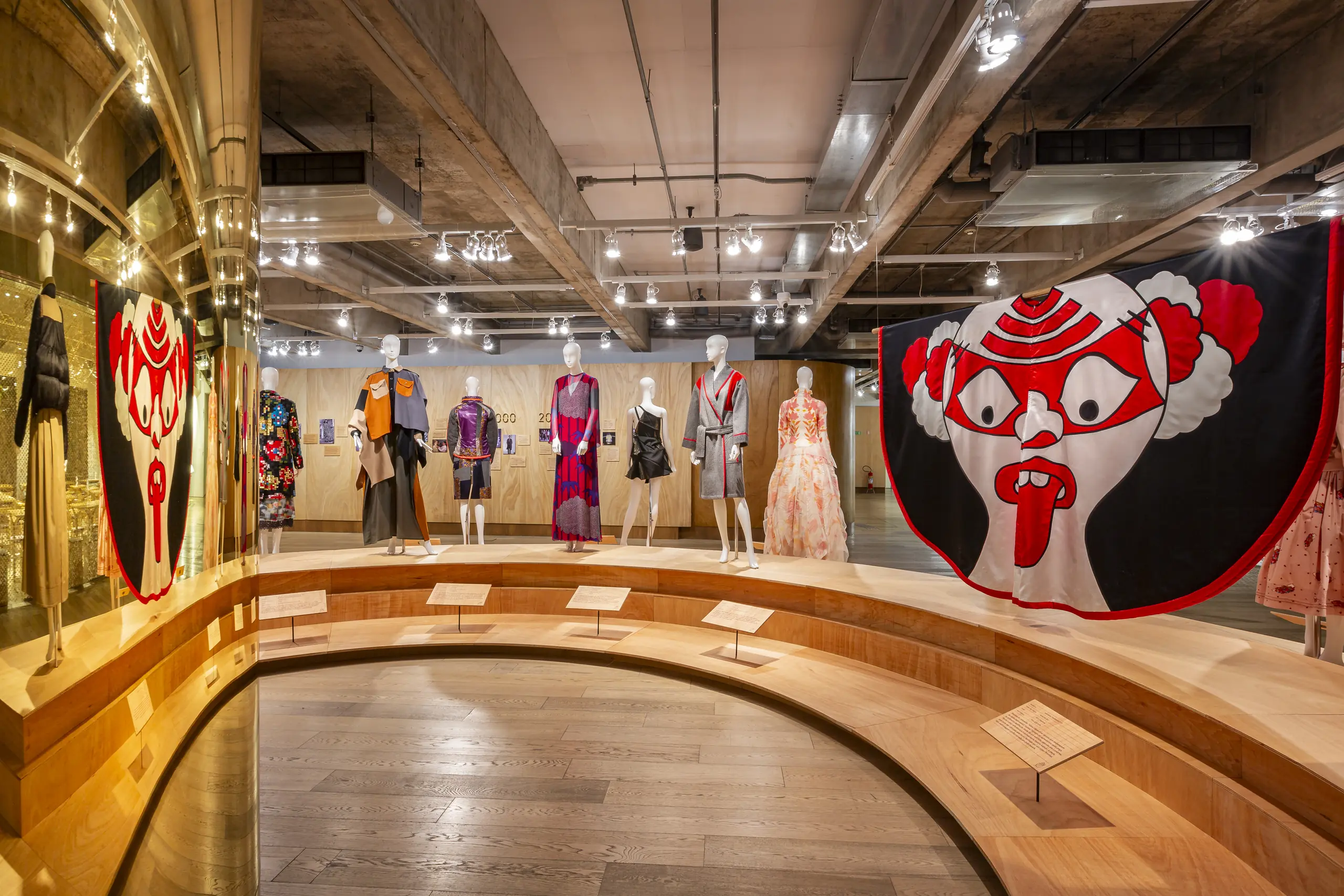
A resurgence of orientalism emerged in a context characterized by freedom, leading to the popularity of styles that blended Japanese and Western influences. Such references can be seen in Kenzo Takada’s piece, sewn in straight lines like a kimono and described as “anti haute couture.” Another example is the creation of Kansai Yamamoto, who boldly used a motif used in painting Japanese kites to create a jumpsuit based on the Kabuki costume.
1980’s:
Two important moments emerged in the 1980s. The first style showcased is extravagant fashion, which mirrored Japan’s rapid economic growth and economic bubble. This is represented in the exhibition by a voluminous piece adorned with delicate pleats, lace, ruffles, and appliqués, which form the foundation of Japan’s kawaii culture. On the other hand, “Shock Wave” was born in the same period. This was a movement that rejected Western elegance, illustrated by a piece with bold drapes with several overlapping layers of raw wool.
1990’s:
Japanese street style has garnered international attention, featuring styles that blend diverse cultures and designs using advanced processing techniques. Yoshiki Hishinuma, who worked in the MIYAKE DESIGN STUDIO, used the term polyester plasticity to create works applying the traditional Japanese technique shibori (dyeing that involves attaching parts of the fabric that will not be dyed and dipping it in pigment, creating organic and exclusive prints).
2000’s onwards:
Minimalist designs emerged that consider sustainability and the expression of the complexity of personalities. In this manner, pieces are crafted by combining various materials of different textures, featuring asymmetrical shapes and seamless seams. The intention is to disrupt beauty itself and transform the clothing making process by allowing the user to create the design.
The exhibition showcases the avant-garde patchwork by ANREALAGE, a brand that has previously exhibited at JHSP. This work transcends the boundaries between digital and analog, offering a comprehensive view of the ever-evolving and diverse transition of contemporary Japanese fashion.