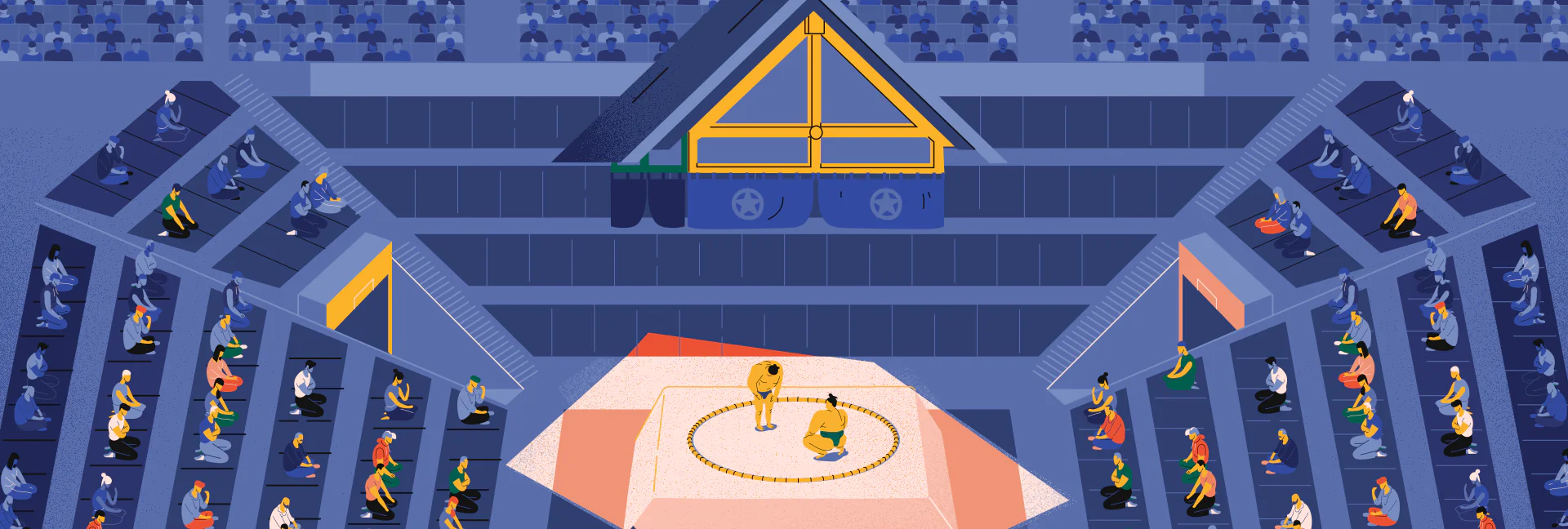
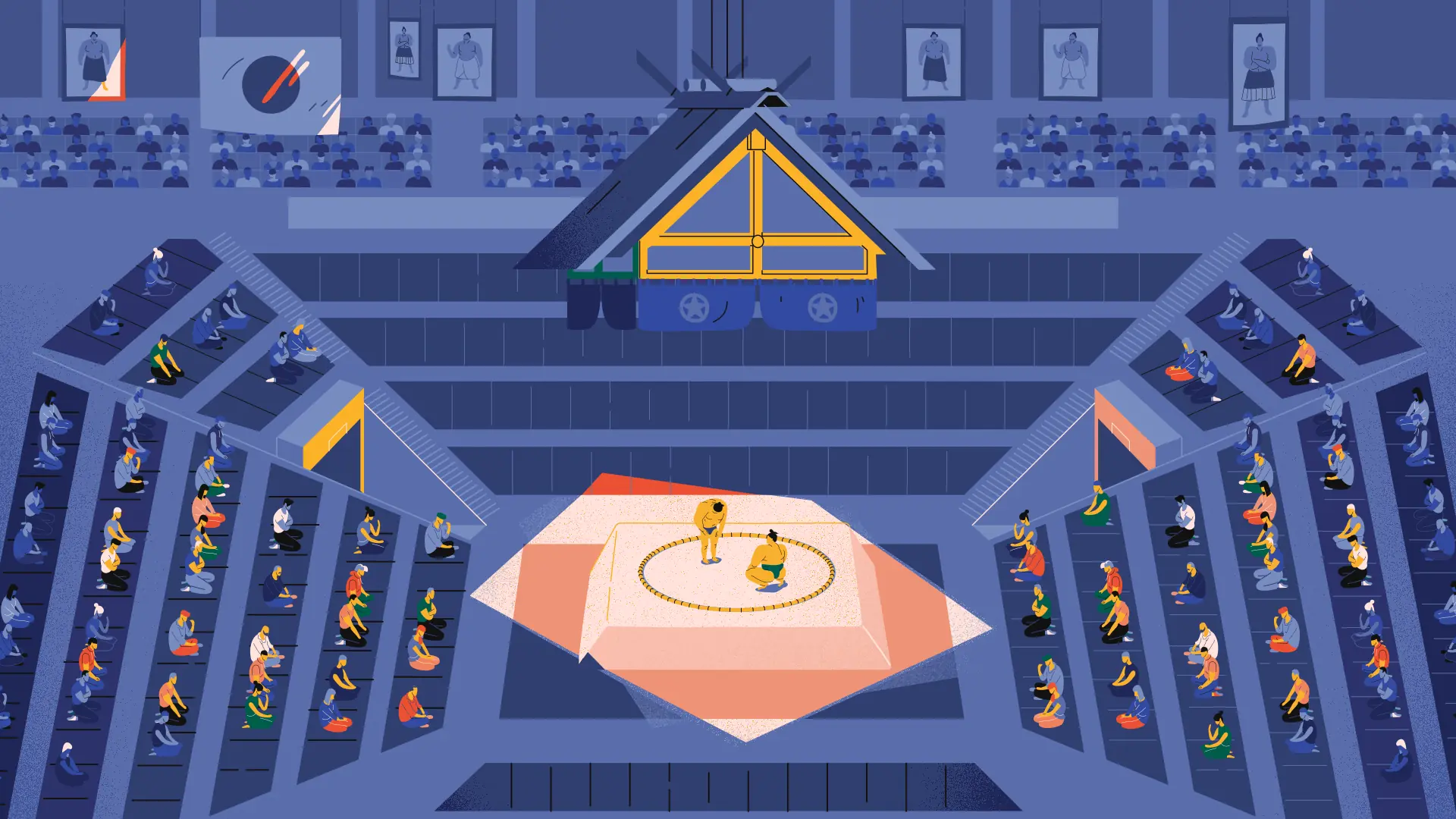
For most sports fans, Ryogoku Kokugikan, a place of architecture that dates back to centuries past, is the stage for the most memorable clashes. It is where three of the main tournaments take place – in January, May, and September. Built in 1985, the stadium is a pulsating reminder of the origin of the sport. Inside and outside of the arena there are many artifacts, such as statues, posters and nobori flags that, together, tell the story of sumo.
Upon entering Ryogoku Kokugikan, the spectator is transported back to the roots of sumo, which are linked to Shinto, the native religion of Japan. Many traditions have been preserved, such as the purification ritual using salt before each showdown. In the museum, which is located on the first floor, visitors can see how the sport has changed until reaching today’s format. Sumo, the materials explain, started out as a ritual dance, was used for training during civil war periods, and eventually became a clean fight aimed at getting the opponent to be thrown out or touch one of his body parts on the floor.
Ryogoku Kokugikan becomes an imposing cauldron on fight days. The 10,000 seats are highly competed for, demanding planning from those who intend to follow the tournament. The fights start early, at around 8 am, and go on until 6 pm. The most important clashes are always at the end of the day. The calendar is designed so that the tournament starts on a Sunday and ends two weeks later, also on Sunday.
For the 2021 edition, the one thing that is for sure is that, when the tournament is over, the region will not fail to experience the culture of sumo. Around the stadium it is always possible to see exhibitions about historical fights, to understand the strict routine in sumo training camps – the heya -, savor the typical dishes of the fighters’ diet, such as chankonabe stew, and take pictures with former sumotoris who stroll the streets there. Sumo, over there, is a sacred cycle of respect for tradition.