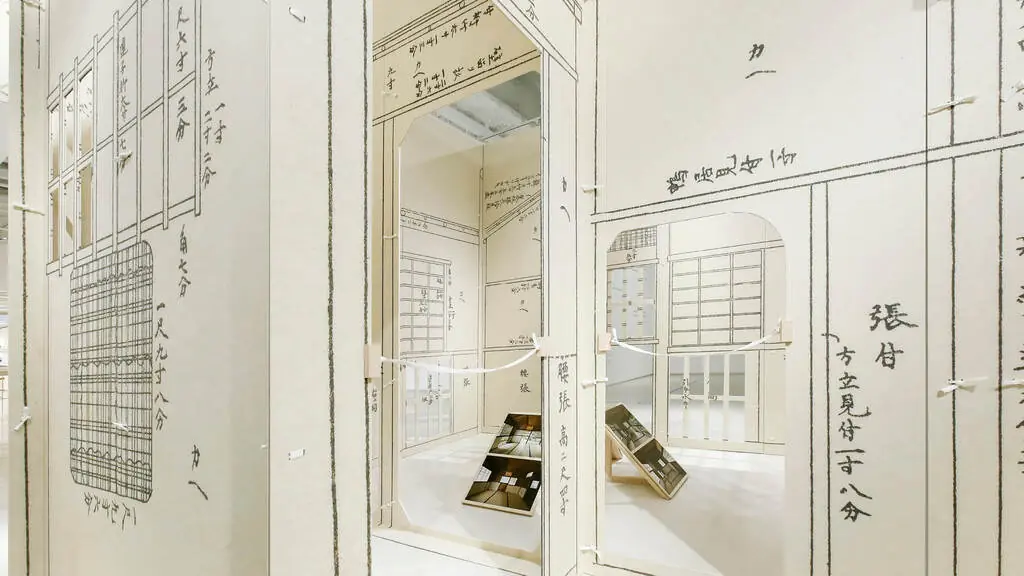
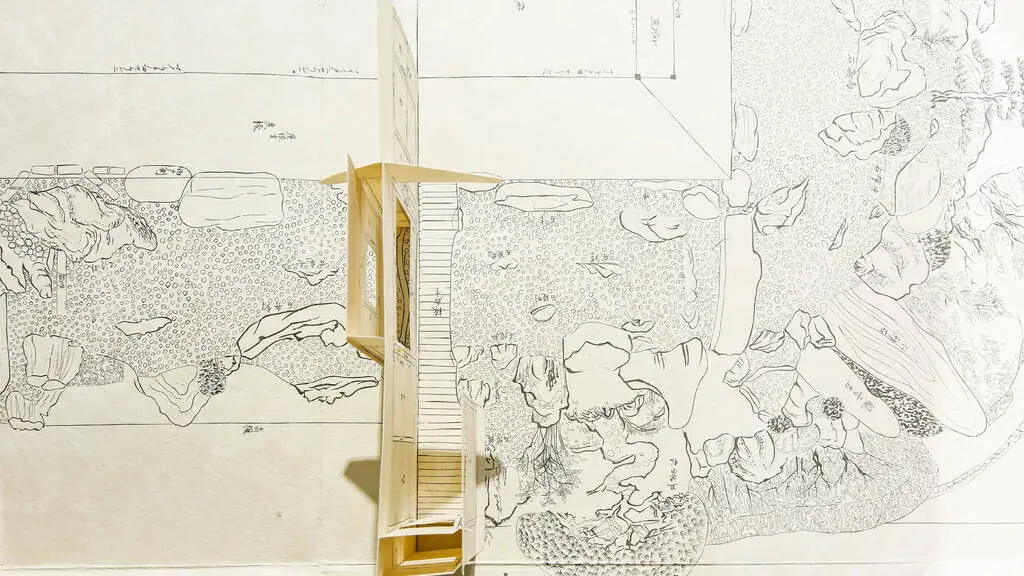
After being exhibited at Japan House Los Angeles, the original exhibition “WINDOWOLOGY: Study of windows in Japan” arrives at Japan House São Paulo on June 29 and is scheduled to be on display through August 22 with free admission. Starting from the role windows play in design, in the construction of social relations, in the arts, architecture, and in literature, the exhibit was conceived by the Window Research Institute, a Japanese institution that researches this element, which, at first sight, may seem to play a simple role in everyday life, but is essential, especially in times of social seclusion such as the world is currently experiencing.
Through nine categories, the exhibit proposes different readings of how windows have been portrayed in craft processes, audiovisual productions, in the construction of tea houses, in contemporary architecture, manga, in their different applications in diverse Japanese environments, and in their multiple formats, which were refined and adapted to the needs of different cultures throughout history.
On display on the second floor of the institution, “WINDOWOLOGY: Study of windows in Japan” explores windows through technical drawings, models, photos, videos, mangas, and literary works in an attempt to show visitors windows as one of the most fascinating components of architecture and of everyone’s daily life. To achieve this, it presents their different types and movements, their prominent positions in environments, and stories about them, and it reveals their power, as they can connect outside and inside, let light and air in, protect you from the cold and rain, and allow you to observe others, nature, and the movement in cities and of people.
From the architectural viewpoint, in the Japanese context windows are made mostly of wood and composed of columns and beams. Their spans have peculiar characteristics: When a tategu (doors and windows) move, the space becomes a fully ventilated environment. An example that reflects this usage is the Japanese tearoom (chashitsu), a special architectural program that brings together different types of windows in a small space, in particular, the Yōsuitei, also known as Jûsansōnoseki (13-window room), the tea house with the largest number of windows and which, in this exhibit, will be on display as a full-size replica (1:1 scale) made of Japanese handcrafted paper (washi).