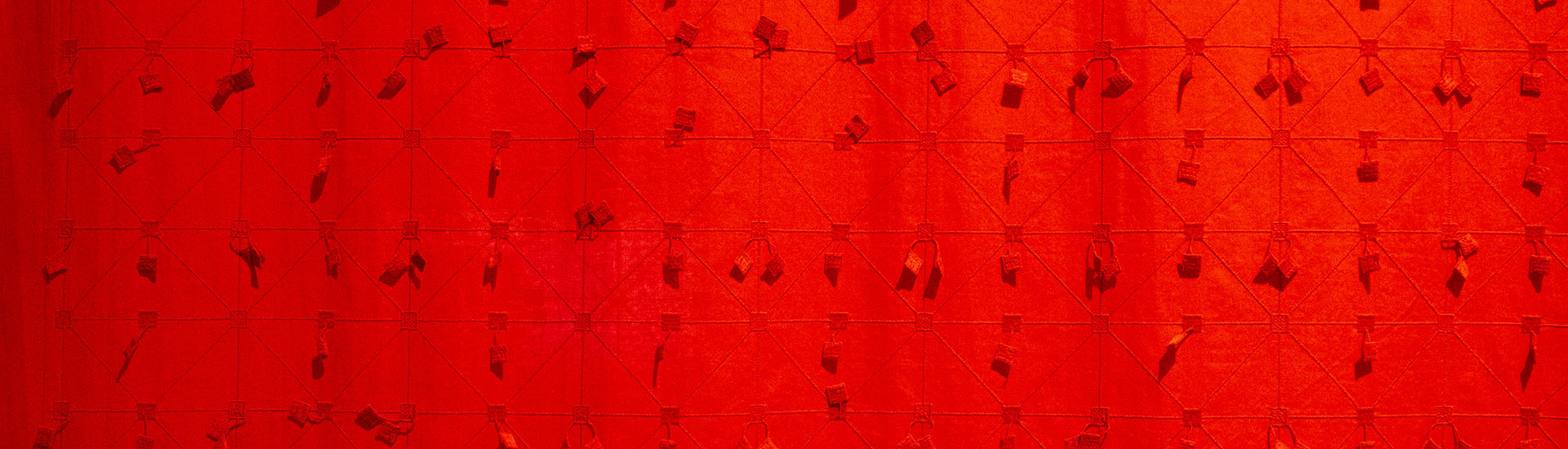
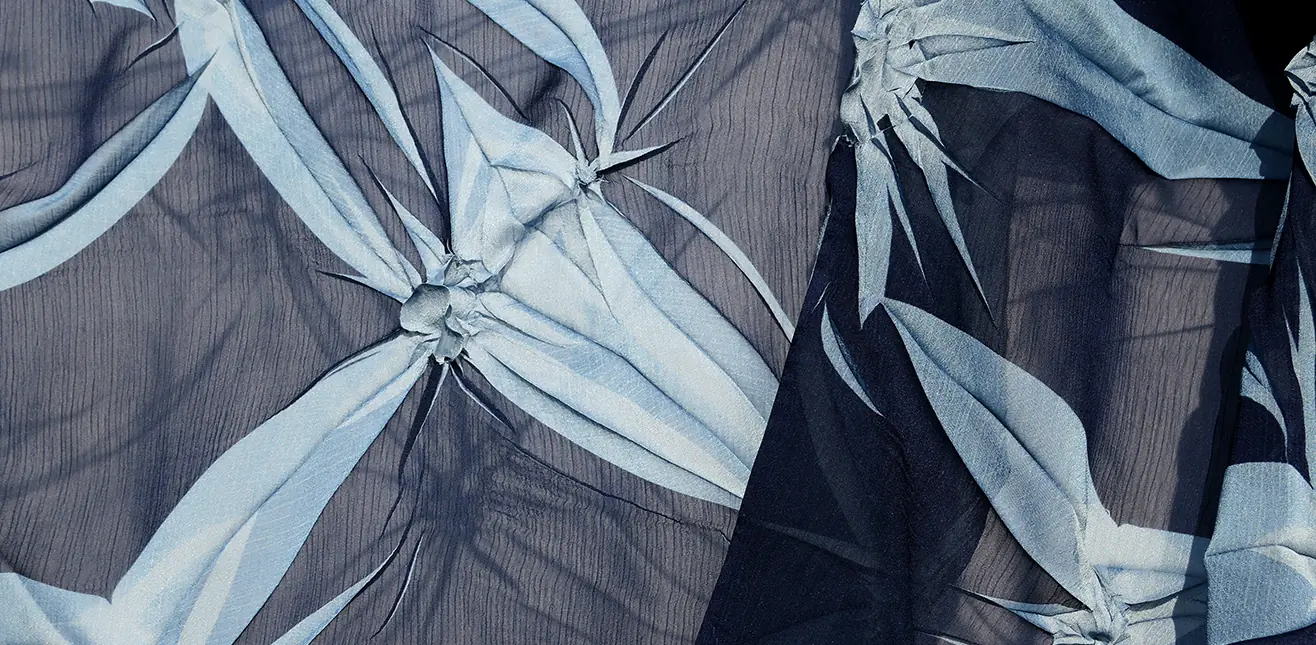
The Japanese textile universe, with its richness and variety of fabrics and prints is the new aspect of Japanese culture to be featured at Japan House São Paulo by means of the ‘NUNO – Contemporary Textile Poetics’ exhibition, which is scheduled for August 20 to October 27, 2019. The exhibition highlights pieces created by the Japanese designer Reiko Sudo, from the NUNO (Japanese word for fabric), a brand that develops aesthetic lines, materials and techniques, often reinterpreting Japan’s textile tradition for the contemporary world.
In the exhibition, curated by design critic and historian Adélia Borges, and Mayumi Ito, consultant and founder of the Amaria community project, 35 different fabrics made from raw materials ranging from bashofu (banana fiber produced in island Amami, Kagoshima, Japan), to newspaper pages, washi (Japanese paper), stainless steel, plastic, rubbers, feathers, and even traditional materials such as cotton, silk, polyester, wool, and felt. The exhibition highlights NUNO’s unique contribution to contemporary world design with a selection of fabrics that highlight the diversity of techniques, textures, materials and colors, including artisanal, semi-industrial, and industrial forms of production. To exhibit such a rich and broad variety of pieces, the architect Pedro Mendes da Rocha, responsible for the exhibit’s expography, was inspired by the organicity of life to present a large tree on the ground floor of the cultural center, whose ‘branches’ and ‘foliage’ are represented by 3.5-m wide panels, each with a different fabric.
As part of the ‘NUNO – Contemporary Textile Poetics’ exhibition, the entrance to the cultural center will become a showcase with koinoboris, stylized carps typical of Japan, symbols of health and longevity, made out of fabrics. The exhibition also features a series of samples the audience can handle, such as Tanabata (2004), origami-shaped polyester fabric that creates a sense of movement, or Kibiso Futsu Crisscross (2008), which reuses fibers from the silk cocoon, previously discarded for being difficult to handle.
Adélia Borges and Mayumi Ito underscore NUNO’s important concern to keep small Japanese weaving mills active and, thus, value these ancient handmade techniques by reviving these processes with new materials and technologies. To them, Reiko Sudo also proposes a new look at beauty, re-signifying, for example, the rust process that is used in dyeing fabrics.
With items in the collection of major international museums, such as MoMA, the Museum of Modern Art (New York), and Victoria & Albert (London), NUNO and designer Reiko Sudo sews on the threshold between absolute manual and extreme high-tech. Founded in Tokyo, in 1984, NUNO is considered one of the finest textile research laboratories today with its ongoing proposal to unite materials, techniques, and processes to produce unique fabrics in a genuine experimentation center.
“The work Reiko Sudo does ahead of NUNO is amazing and admirable. After more than 30 years of the founding of the brand, Reiko continues her research with unique creativity contributing to international design with her innovations, even while working under the premise of traditional techniques,” says Japan House São Paulo Cultural Director Natasha Barzaghi Geenen.