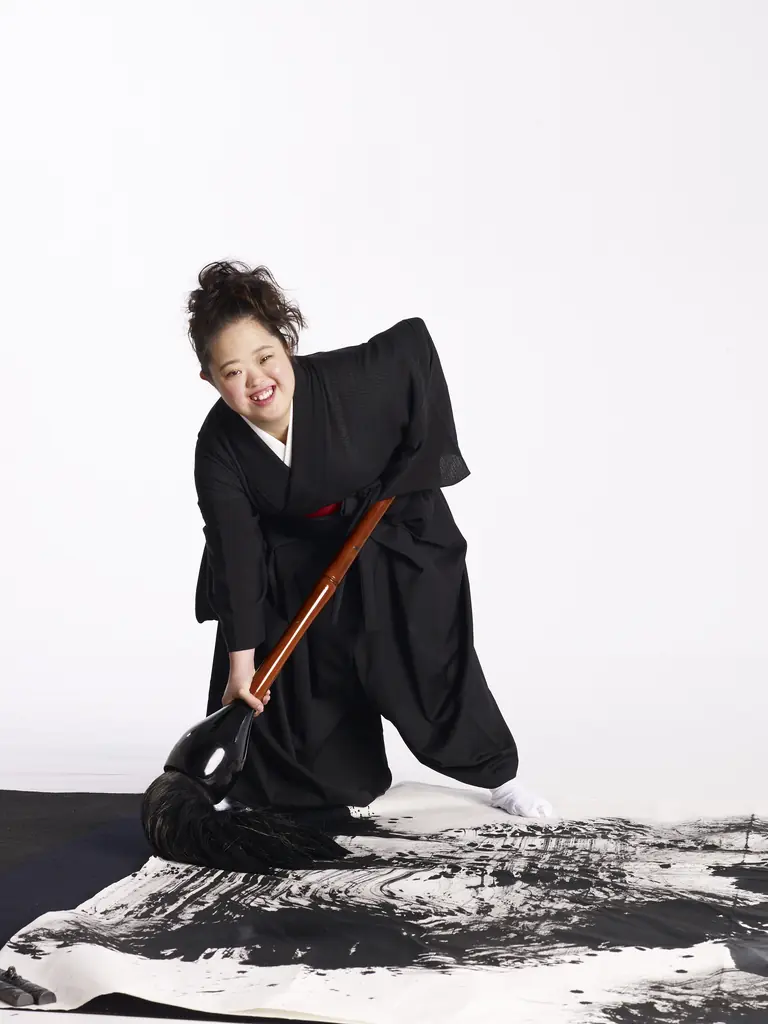
This time, the cultural institution offers samples of Shodō, calligraphy, an extremely well-known and popular poetic and philosophical manifestation in Japan. The exhibit will feature work of Shoko Kanazawa, who uses ancient techniques and knowledge and updates them, bringing their concepts to contemporary times.
The artist’s work reveals and portrays the philosophy of Shodō (書 道) which means, in Japanese, the path of writing, in which ‘Shō’ expresses the act of representing letters and words with varied methods and forms. This work aims to vent emotions through writing, and is an art and discipline taught to Japanese children during primary education. It is practiced both with ideogrammatic characters – kanji –, and with the phonetic ones – hiragana and katakana. Calligraphy is known to demand high precision from the calligrapher. Each kanji character must be written following a specific stroke order, thus increasing the discipline required of those who practice this art. Each artist’s freedom in this gesture and interpretation is what determines their individual style.
Written using sumi (black ink) and various brushes on Japanese paper, the art of calligraphy is considered a metaphor for life itself. Thus, strong strokes alternate with more delicate ones, producing different effects in accordance with the speed, rhythm, the pressure on the paper, the interval between strokes, and the material used.
Eleven carefully selected pieces will be showcased at the exhibit, which will be installed on the ground floor of Japan House São Paulo. There are ten parchments and a screen, many of which on a large scale, measuring up to two meters in length, which are part of the repertoire of work done by Kanazawa, who practices, above all, performance calligraphy, using large brushes that demand the direct involvement of her whole body when applying the sumi ink on the paper.
“Shoko Kanazawa’s pieces bring a new perspective within the Shodō, an important artistic manifestation that reflects Japanese culture and aesthetics so well. The artist explores this ancient, traditional, and extremely popular art in the country in a unique, significant manner, uniting this performance and body character with all the conceptual and spiritual aspects of Shodo. It is a great honor to be able to present it for the first time in Brazil at our headquarters,” says Japan House São Paulo Cultural Director and exhibit curator Natasha Barzaghi Geenen.